Why Reading Stories is the Secret to Language Learning Success
When I first started learning Japanese, I spent months memorizing vocabulary lists and grammar rules. Then I had my first real conversation with a native speaker and froze. Almost everything I had studied was gone the moment I needed it.
What helped was reading. Short stories at a level I could mostly follow gave me the same words over and over, in sentences that meant something, and that is when vocabulary started to stay with me.
Why stories stick better than lists
A word list gives you a word and a translation. A story gives you the word, the sentence around it, who said it and why. That extra context is a lot more to hang a memory on. You also run into the same common words again and again without trying to, which is exactly the repetition a list makes you force.
Grammar works the same way. You see a pattern used dozens of times before you ever look up the rule, so by the time you study it the rule mostly confirms something you have already noticed. Stories also carry a bit of culture with them, like how people greet each other or what they eat, which textbooks tend to skip.
None of this means rules and lists are useless. They help. They just don't get you to the point where you can understand and respond in real time, and that was my problem in that first conversation.
Making it work
The main thing is finding stories that match your level and that you actually want to read. If you have to look up every third word it turns into a decoding exercise, and if the topic bores you, you will stop. Somewhere in between is the sweet spot where you understand most of it and pick up a few new words per page.
Some things that help:
- Tap or look up a word only when you can't follow the sentence without it
- Listen to the audio while you read, so you connect the written word to its sound
- Save the words you looked up and review them over the next few days
Where StoryTime Language fits
I built StoryTime Language to make that kind of reading easy to find. It writes stories at your CEFR level, from A1 to C2, and reads them aloud at an adjustable speed. It is on Google Play with a two-week trial, then a free mode.
Share this article
Related Articles
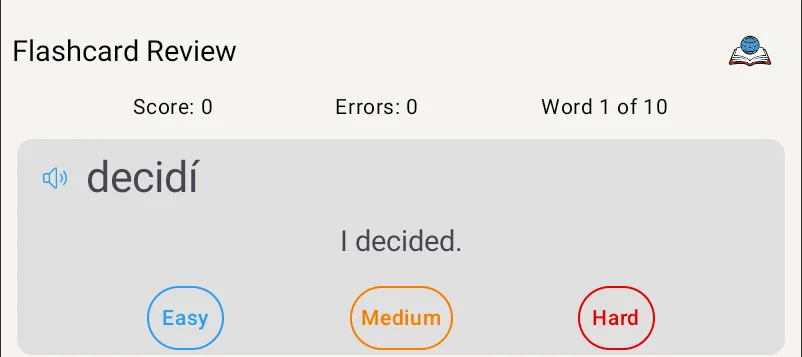
Building Vocabulary Through Recognition to Recall: A Progressive Approach
Understanding a word and being able to say it are two different skills, and the vocabulary games in StoryTime Language are ordered to take you from one to the other.
How to Create Language-Learning Story Prompts That Match Your Needs
How to write a story prompt in your own language so StoryTime Language gives you a story built around a situation you will actually face, at your level.
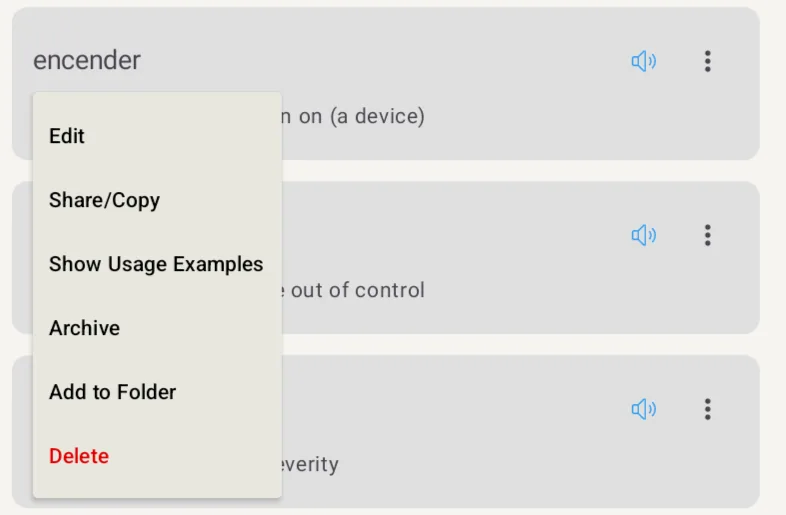
The Language Learner's Dilemma: When Words Don't Mean What You Think They Mean
Simple words rarely translate one to one, so I added usage examples to StoryTime Language to show how a word behaves in different sentences.